
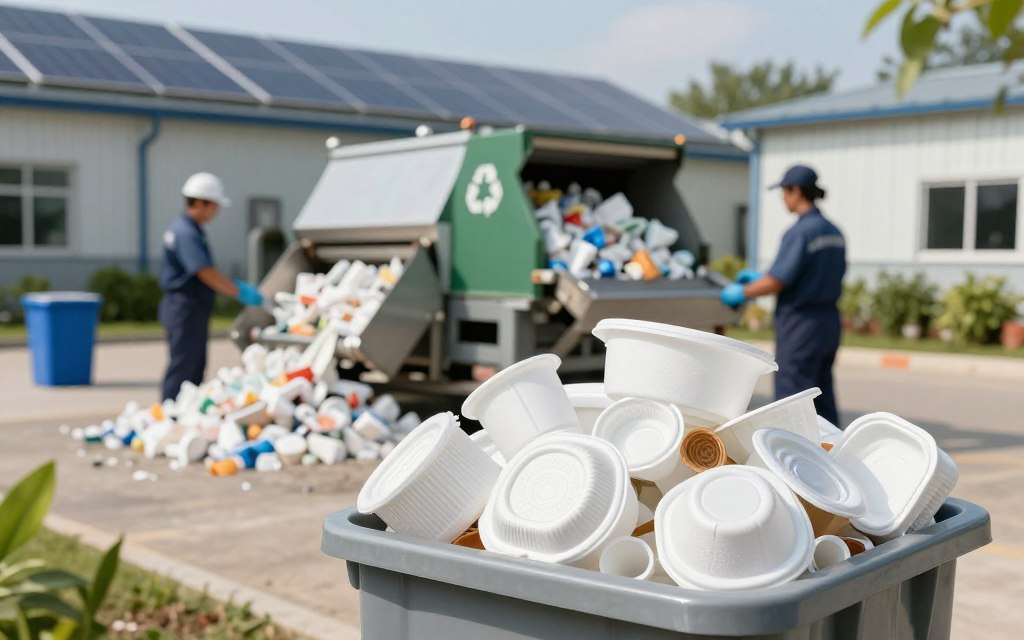
Can polystyrene be recycled? Many people ask this about polystyrene. Yes, but the process is not simple.
Some types can be processed, while others create major challenges. Acceptance depends on the material type, contamination, and local recycling services.
Expanded polystyrene, often called foam, usually cannot enter curbside recycling programs. However, special facilities may accept it for foam recycling. This article explains polystyrene recycling and how to prepare items for proper disposal.
Always check local recycling rules because cities and states follow different guidelines. Polystyrene pollution and waste create serious environmental concerns. Sustainable options can reduce the use of single-use foam and rigid plastic products through better polystyrene disposal.
Key Takeaways
- Some forms of polystyrene are recyclable, but acceptance varies.
- Expanded polystyrene (EPS) is often excluded from curbside programs.
- Check local guidelines for recycling options and rules.
- Environmental concerns are associated with polystyrene waste.
- Explore sustainable alternatives to reduce single-use products.
What Is Polystyrene and Why It Matters in Waste Management
What is polystyrene? Polystyrene is a synthetic plastic made from styrene monomers. It comes in two main forms: solid, rigid polystyrene and expanded polystyrene (EPS), a light foam. Both forms have distinct properties that suit many uses.
Polystyrene is known for its low weight, rigidity, and moisture resistance. These features let workers mold it into many shapes for packaging, food service products, and construction insulation. These same features also create major waste management challenges.
Chemical Composition and Properties of Polystyrene
The chemical structure of polystyrene has long chains of styrene. These chains give the material its distinct physical features and strong insulation. Moisture resistance also increases its usefulness in many products.
Environmental Impact of Polystyrene Waste
Polystyrene waste creates serious environmental challenges despite its practical uses. One major concern is its contribution to landfill volume. Foam takes much space for its weight and breaks into pieces, making recovery harder.
Contribution to Landfill Volume
Lightweight foam polystyrene can greatly increase landfill volume. It does not readily biodegrade under typical landfill conditions. Polystyrene waste may remain for many years, creating lasting pressure on waste management systems.
Related Posts:
Marine Pollution Concerns
Another serious concern is marine pollution and the need for better plastic waste management. Storm drains and waterways can carry polystyrene waste to coastal areas. Wildlife may mistake fragmented foam for food, showing the environmental impact of foam and creating serious risks for marine life.
In conclusion, understanding what is polystyrene and its environmental effects supports effective waste management. Recognizing the challenges of polystyrene waste can guide more sustainable practices and solutions.
| Property | Solid Polystyrene | Expanded Polystyrene (EPS) |
|---|---|---|
| Weight | Heavy | Lightweight |
| Insulation Performance | Moderate | High |
| Moisture Resistance | High | High |
| Molding Ease | Easy | Very Easy |
Can Polystyrene Be Recycled? Understanding the Process
To understand how polystyrene is recycled, we must examine the processes involved. Polystyrene recycling is not simple and depends on facilities equipped to handle this material.
Two main methods are used: mechanical recycling and chemical recycling.
The Mechanical Recycling Process
Mechanical recycling is the most familiar method for recycling polystyrene. It includes several key steps:
- Collection and Sorting: The first step is to collect polystyrene items. These items must be sorted carefully to remove food residue, labels, tape, and any non-recyclable attachments. This ensures that only clean materials enter the recycling stream.
- Compaction and Melting: Once sorted, the polystyrene is compacted to reduce its volume. This densification is crucial because polystyrene is lightweight and bulky, making transportation inefficient. After compaction, the material is melted, filtered, and then pelletized to create recycled polystyrene.
Chemical Recycling Methods
Chemical recycling offers another approach by breaking polystyrene into its chemical components. This method can produce useful feedstocks, such as styrene monomer, for making new materials. However, it requires polystyrene depolymerization.
- Depolymerization Techniques: These techniques involve controlled industrial processes that manage energy inputs and emissions. It’s important to note that chemical recycling is not universally available and comes with its own set of challenges.
Consumers should not try chemical processing themselves. They should follow guidelines from authorized recycling programs for safe, effective recycling.
Types of Polystyrene and Their Recyclability
Understanding the types of polystyrene supports effective recycling. Each type has unique properties and uses that affect recycling. The four major forms are Expanded Polystyrene (EPS), Extruded Polystyrene (XPS), High Impact Polystyrene (HIPS), and General Purpose Polystyrene (GPPS).
Expanded Polystyrene (EPS)
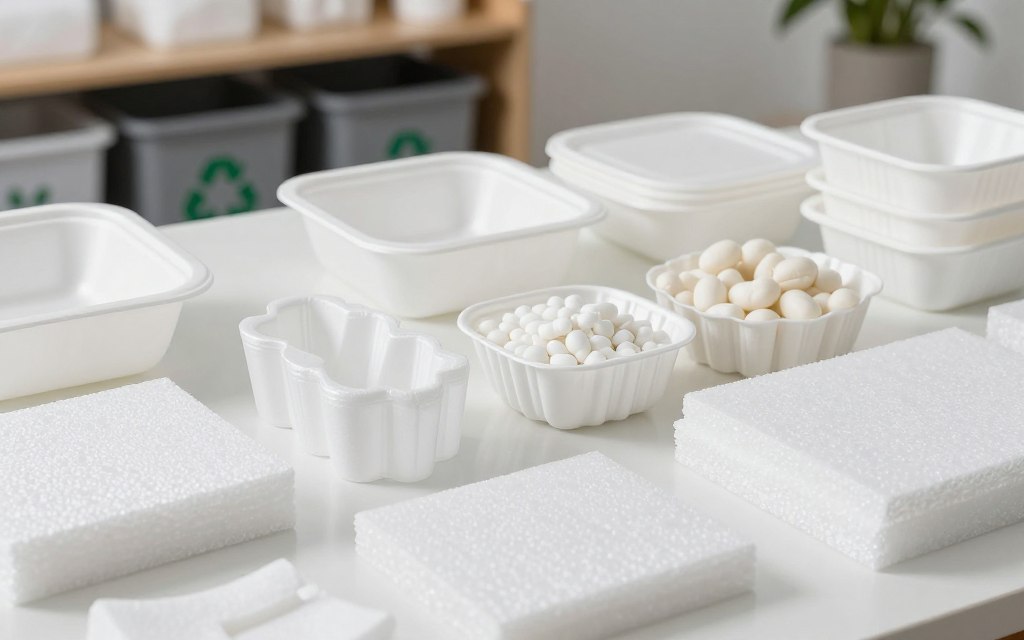
Expanded Polystyrene, commonly called EPS, is a lightweight foam used in protective packaging, coolers, and some food service products. Its structure provides excellent insulation and cushioning. However, EPS recycling often has limits and may require specialized drop-off or commercial programs, so check local guidelines.
Extruded Polystyrene (XPS)
Extruded Polystyrene, or XPS, has a dense, closed-cell structure used widely for building insulation. Unlike EPS, XPS appears less often in consumer packaging. Construction waste may need separate handling, so learn local disposal methods for effective XPS recycling.
High Impact Polystyrene (HIPS)
High Impact Polystyrene, known as HIPS, is a modified, rigid plastic used in appliance components, packaging, and durable goods. Its recyclability depends greatly on product design and facility sorting capabilities. Before HIPS plastic recycling, confirm that local programs accept this type of polystyrene.
General Purpose Polystyrene (GPPS)
General Purpose Polystyrene, or GPPS, is a clear or brittle, rigid material found in containers, laboratory items, and packaging components. GPPS recycling is possible, but resin identification codes offer guidance and do not guarantee local acceptance. Check product labels and contact manufacturers when needed to ensure proper recycling.
These four types of polystyrene share a base material, but their properties and recycling processes differ greatly. Check local facility capabilities and sort materials correctly to improve recycling efforts.
Common Products Made from Polystyrene
Polystyrene is a flexible material used in many everyday products. Knowing these products helps you make informed recycling and disposal choices. This guide covers major product types and their recycling needs.
Packaging Materials
Polystyrene is common in packaging materials. Polystyrene packaging protects many products during shipping and transport.
- Foam blocks used for protecting fragile items during shipping
- Loose-fill protective pieces, often seen in boxes of electronics
- Molded shipping inserts designed for specific products
- Appliance packaging that ensures safety during transport
- Food-delivery insulation that keeps meals hot or cold
- Protective corner pieces for added stability
Clean, dry foam packaging may qualify for specialized recycling programs. Food or liquid contamination often prevents recycling. Check local guidelines before recycling these items.
Food Service Items
Disposable polystyrene items are common in the food service industry. These include:
- Disposable cups and plates
- Takeout containers and lids
- Trays for serving food
Food residue, grease, and mixed materials often make these polystyrene food containers unsuitable for recycling. Keep these items clean before disposal.
Construction and Insulation Products
Construction uses polystyrene, especially for insulation. Products such as polystyrene insulation may appear in renovation and building waste. Separate these materials from household recyclables because disposal rules differ.
Identify whether a product is clean consumer packaging, food service material, or construction debris. Each category may have different collection and disposal requirements. Reuse items and separate materials properly to support recycling.
Recognizing products made from polystyrene supports responsible disposal. For more information about recycling options, visit this resource.
Challenges in Recycling Polystyrene
Polystyrene recycling challenges can block effective processing and material recovery. Understanding these barriers helps communities build better waste management strategies.
Low Density and High Volume Issues
One major challenge is its low density and high volume. Expanded polystyrene (EPS), often used in packaging, is mostly air and produces little saleable material. This low-density foam raises storage, handling, and transportation costs.
Transporting low-density foam over long distances can be impractical. Baling and shipping costs often exceed profits from recycled material. Many facilities therefore struggle to justify polystyrene processing logistics.
Contamination Concerns
Contamination creates another major hurdle for polystyrene recycling. Food residue, oils, dirt, and adhesives can lower recyclable quality. Even small amounts can cause facilities to reject entire loads of contaminated recyclables.
Facilities often recommend rinsing polystyrene items before recycling, but some do not allow it. Wet or heavily soiled foam creates handling problems and disrupts efficient operations.
Economic Feasibility of Recycling Programs
Polystyrene recycling programs face serious economic concerns. Facilities need special collection logistics, trained staff, and stable end markets. Even when facilities can handle polystyrene, they may reject it if recycling program costs are too high.
Local acceptance policies often reflect these operating limits. Residents should know that an item may look recyclable but still be barred from curbside bins. This understanding can support stronger recycling infrastructure and more effective initiatives.
Recycling Options for Polystyrene in the United States
In the United States, several recycling options exist for polystyrene, each with its own rules and availability. Learning these pathways can improve polystyrene recycling in the United States and reduce environmental harm.
Curbside Recycling Programs
Curbside foam recycling is common, but not every municipal program accepts polystyrene. Many programs exclude loose foam, food service foam, packing peanuts, and rigid polystyrene items. Check your local sanitation department or a recycling search tool, rather than trusting the recycling symbol.
Drop-Off Recycling Centers
Polystyrene drop-off locations offer another recycling option. These centers may accept clean, dry expanded polystyrene (EPS) packaging or other types that curbside services reject. Check preparation rules, operating hours, fees, and whether households or businesses can use the site.
Mail-Back Recycling Programs
Mail-back recycling programs let people send certain clean foam materials with prepaid or customer-funded shipping. Shipping bulky, low-density materials can cost a lot and may require strict packaging. Verify accepted materials before joining these programs.
Specialized Recycling Facilities
Specialized recycling facilities handle many types of polystyrene waste. These include commercial densifiers, construction-material processors, and regional recyclers that may accept selected polystyrene streams. Call ahead about accepted materials and the process after collection, so your efforts support real recycling, not disposal.
“Recycling is not just about collecting materials; it’s about transforming them into something new.”
How to Prepare Polystyrene for Recycling
To prepare polystyrene for recycling, follow these essential guidelines. Proper preparation improves the chance of effective recycling. Follow local facility rules because accepted conditions may vary.
Cleaning and Sorting Guidelines
To prepare polystyrene for recycling, keep materials clean and sort them correctly. Follow these steps:
- Remove all contaminants: Ensure that food, liquids, tape, labels, paper, plastic film, and metal parts are removed whenever possible.
- Clean EPS foam: Clean, dry foam is generally preferred. However, take care not to contaminate waterways while washing.
- Sort recyclable plastics: Separate Expanded Polystyrene (EPS), Extruded Polystyrene (XPS), rigid polystyrene, and other plastics unless the recycling facility allows them to be combined.
- Keep materials dry: Protect the foam from wind and moisture to prevent small pieces from becoming litter.
Volume Reduction Techniques
Reduce foam volume to make transportation and storage easier. Consider these techniques:
- Stack or nest: Compatible pieces can be stacked or nested to save space.
- Use secure bags or boxes: Place loose-fill packaging in a secure bag or box if permitted by the facility.
- Avoid unsafe practices: Do not burn, melt, chemically treat, or heavily compress the material unless instructed by the recycling program, as these actions can create safety hazards.
Volume reduction should support transportation and storage, not replace recycling facility requirements. Always confirm specific guidelines with your local recycling center or program before delivery.
Responsible Disposal Tips When Recycling Isn’t Available
When recycling options for polystyrene are limited, responsible disposal matters. These polystyrene disposal tips explain how to dispose of foam safely and reduce environmental harm.
Safe Disposal Methods
When recycling is unavailable, follow local solid-waste rules for household waste disposal. Use these guidelines to handle foam safely.
- Follow Local Guidelines: Always check with your local waste management authority. Only place accepted polystyrene in your household trash when directed.
- Contain Lightweight Foam: Ensure that foam materials are securely contained to prevent them from escaping collection vehicles or becoming windblown litter.
- Special Cases: Items such as construction insulation, large commercial quantities, or chemically contaminated materials may require specialized disposal methods, including transfer stations or commercial haulers.
- Prohibited Actions: Never burn polystyrene, dump it outdoors, or place it in storm drains. Avoid unapproved chemical treatments as well.
Reducing Polystyrene Use in Daily Life
Reducing polystyrene use is the most effective way to prevent waste, especially when recycling services are limited. These choices can help reduce single-use plastic:
- Choose Minimal Packaging: Opt for products that use less packaging material.
- Request Alternatives: Ask retailers to avoid using foam shipping materials.
- Bring Reusable Containers: Carry reusable cups and food containers when possible.
- Select Durable Products: Invest in sturdy coolers and storage solutions.
- Reuse Packaging: Whenever practical, reuse clean packaging materials instead of discarding them.
“The best waste is the waste that is never created.”
| Action | Description | Benefits |
|---|---|---|
| Follow Local Guidelines | Check local waste management rules for disposal. | Ensures compliance and reduces environmental impact. |
| Contain Foam | Securely bag polystyrene to prevent litter. | Reduces pollution and protects wildlife. |
| Reduce Use | Choose products with less packaging. | Minimizes waste generation at the source. |
Sustainable Alternatives to Polystyrene
Choosing sustainable packaging alternatives can help create a greener future. Growing environmental concerns have increased interest in replacing polystyrene in many uses. Here are several promising options:
Biodegradable Packaging Options
Biodegradable packaging can reduce waste and lower environmental harm. Notable choices include:
- Molded Fiber: Made from recycled paper, molded fiber is compostable and often used for food containers.
- Paper-Based Packaging: This type of packaging is versatile and can be easily recycled or composted.
- Certified Compostable Products: These products meet specific standards and break down in commercial composting facilities.
- Agricultural-Fiber Materials: Utilizing agricultural waste, these materials provide an eco-friendly alternative.
Biodegradable and compostable do not mean the same thing. Many certified compostable products need special facilities to break down, and those facilities are not available everywhere.
Reusable Container Solutions
Reusable food containers offer a sustainable choice for daily use. Options include:
- Stainless Steel: Durable and long-lasting, stainless steel containers are ideal for food storage.
- Glass: Glass containers are recyclable and do not leach chemicals, making them a safe choice.
- Durable Polypropylene: This plastic is designed for repeated use and can be recycled at the end of its life.
- Silicone: Flexible and reusable, silicone containers are great for food storage and can withstand high temperatures.
These containers help the environment when people reuse and clean them often. Transportation impacts also affect their overall benefits.
Industry Shifts Toward Eco-Friendly Materials
Many retailers, restaurants, and manufacturers now support eco-friendly materials. They are:
- Reducing Unnecessary Packaging: Companies are rethinking their packaging strategies to minimize waste.
- Redesigning Products: Innovative designs focus on using less material and enhancing recyclability.
- Increasing Recycled Content: More businesses are incorporating recycled materials into their products.
- Improving Reuse Systems: Initiatives are being developed to encourage the return and reuse of packaging.
Consumers should review a product’s full life cycle instead of trusting marketing claims alone. Learning about the environmental performance of alternatives to polystyrene supports better choices.
Conclusion
In this can polystyrene be recycled conclusion, the answer is nuanced. Polystyrene can be recycled in some cases, but access remains limited and often depends on the material. Consumers must identify whether they have EPS, XPS, HIPS, or GPPS.
For responsible recycling, keep polystyrene clean and dry. Separate it from incompatible waste to improve its chance of acceptance by local programs. Check with curbside programs, drop-off centers, mail-back services, or specialized facilities before recycling.
If recycling options are unavailable, follow local disposal instructions.
Food contamination, low density, and transportation costs keep polystyrene out of many recycling bins. Source reduction and reuse are therefore vital. Choosing thoughtful polystyrene alternatives can support sustainable waste management.
Before placing any polystyrene product in a recycling container, verify local rules. These steps promote responsible recycling and support a healthier environment.
