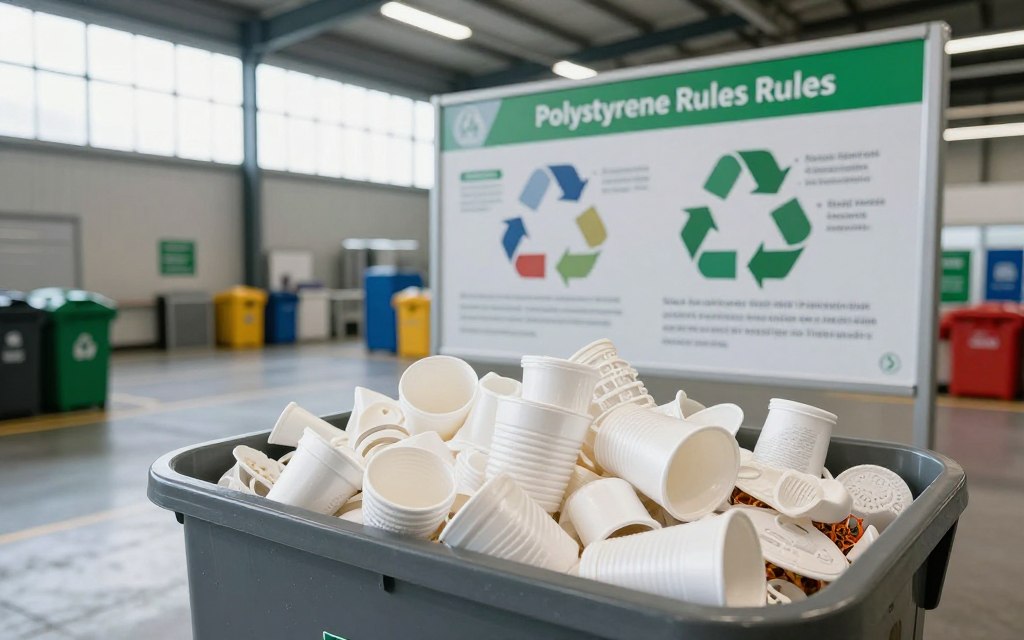
Polystyrene disposal can be confusing because some types can be recycled. Most standard household collections in the UK do not accept it. Expanded packaging, rigid products, and food-contaminated items need different methods.
Can you recycle polystyrene? It depends on the material and your local council. Recycling polystyrene, reuse, and general waste disposal each involve different choices. Rules vary across England, Scotland, Wales, and Northern Ireland, so check your council.
This guide explains UK polystyrene recycling and practical waste steps. Clean and sort items, check recycling symbols, and find specialist facilities. Reducing future waste can help you support the environment.
Key Takeaways
- Polystyrene can sometimes be recycled, but not in standard household collections.
- Different types of polystyrene require specific disposal methods.
- Local council rules dictate what materials are accepted for recycling.
- Understanding recycling symbols is crucial for proper disposal.
- Practical steps can help reduce future polystyrene waste.
Understanding Polystyrene: Types and Environmental Impact
To understand what is polystyrene, examine its types and environmental effects. Polystyrene is a synthetic plastic made from styrene, a liquid hydrocarbon derived from petroleum. This versatile material is used in packaging, food-service containers, insulation, and household products.
What Is Polystyrene?
What is polystyrene? It comes in two main types: expanded polystyrene (EPS) and rigid polystyrene. Each type has distinct traits and uses.
Chemical Composition and Manufacturing Process
Polystyrene has a chemical structure made of long chains of styrene monomers. Manufacturers create rigid polystyrene by polymerizing styrene without adding air, producing a dense material for trays and containers. In contrast, expanded polystyrene (EPS) forms when manufacturers add air to the polymer, making it light and bulky.
Its high proportion of trapped air provides excellent insulation and cushioning. Both types are widely used because they are affordable and versatile. However, they pose significant environmental challenges.
Environmental Concerns of Polystyrene Waste
Polystyrene waste is especially harmful for several reasons:
- It is lightweight and easily scattered by wind, leading to littering.
- It takes up substantial space during storage and transportation.
- When broken down, it can create small pieces that contaminate waterways.
Food, oils, labels, and adhesives can contaminate polystyrene, making recycling harder. Some polystyrene is technically recyclable, but limited collection systems often prevent effective recycling. Understanding these issues helps explain the polystyrene environmental impact.
Related Posts:
Can You Recycle Polystyrene in the UK? Current Rules Explained
UK recycling rules for polystyrene follow specific regulations. Many standard household kerbside programs do not accept it. Understanding these rules supports responsible waste management.
Why Standard Kerbside Collections Don’t Accept Polystyrene
One reason kerbside recycling polystyrene is not accepted involves its light weight. It crushes easily, which makes sorting difficult during recycling. It can also spread during collection and contaminate other materials.
Food packaging creates another challenge because residue and grease lower the recovered material’s value. Contaminated polystyrene often goes to landfills instead of recycling. This helps explain why polystyrene is not recyclable in many local programs.
However, materials rejected by household bins may still be recycled elsewhere. This often means local collection systems lack the equipment or markets needed to handle polystyrene.
The Role of WRAP and Government Recycling Guidelines
WRAP, the Waste and Resources Action Programme, helps shape UK recycling communications and guidance. It supports clear WRAP recycling guidelines for local councils. Each council still decides which household materials it collects.
Local councils give instructions for household recycling, commercial waste services, and specialized polystyrene take-back schemes. Residents should check current council guidance instead of old leaflets or social media posts.
Plastic identification codes can also mislead people. A recycling symbol does not guarantee acceptance in local collection programs. For accurate information, visit your local authority’s website or contact it directly.
Expanded Polystyrene vs. Rigid Polystyrene: What’s Recyclable?
Expanded polystyrene and rigid polystyrene have different recycling challenges and opportunities. Knowing these differences supports better waste management and recycling practices.
Expanded Polystyrene (EPS) Recycling Options
Expanded polystyrene packaging often protects appliances, furniture, and electronics. Several EPS recycling options exist for clean, dry EPS packaging:
- Specialist Recyclers: Many facilities specifically accept EPS for recycling, provided the material is free from contamination.
- Building-Material Recovery Schemes: Some initiatives focus on reusing EPS in construction materials.
- Drop-Off Points: Certain locations allow consumers to drop off EPS for recycling.
Keep EPS separate from food-contaminated foam, plastic films, and other packaging. Mixing these materials can slow the recycling process.
Rigid and High-Impact Polystyrene Disposal
Rigid polystyrene includes denser items, such as molded trays, disposable food containers, and yogurt-style pots. Some may be recyclable, but local facilities decide what they accept and can sort.
Consider these factors when disposing of rigid polystyrene:
- Cleanliness: Ensure the items are clean and free from food residues.
- Local Guidelines: Check with your local council or recycling facility to confirm what types of rigid polystyrene they accept.
- Product Design: The design and color of the product can affect recyclability.
High-impact polystyrene should not go automatically into household recycling bins. Recyclability varies among recyclable polystyrene types, so check local guidelines before disposal.
UK Local Council Guidelines for Polystyrene Disposal
Understanding your local council recycling policy helps you dispose of polystyrene correctly. Each council sets its own rules, which can differ greatly across regions. Check the rules before disposal.
How to Check Your Local Council’s Recycling Policy
Visit your council’s official website to find its recycling policy. For polystyrene disposal UK guidance, search for “polystyrene,” “foam packaging,” “plastic packaging,” “household recycling,” and “household waste recycling center.” These terms can help you find the right information quickly.
As you review the guidelines, check whether your council accepts:
- Expanded Polystyrene (EPS)
- Rigid polystyrene
- Food trays
- Large packaging
Some councils require you to take materials to a specific recycling site. Others may list polystyrene under general waste. Also check opening hours, quantity limits, and preparation requirements, as services may differ for household and commercial waste.
Regional Variations Across England, Scotland, Wales, and Northern Ireland
Different national and local systems manage waste policy. Therefore, recycling practices vary across England, Scotland, Wales, and Northern Ireland. Check your council for accurate England recycling rules and regional guidance.
Some councils provide specialist guidance for polystyrene recycling, while others direct residents to general waste disposal. For Scotland Wales Northern Ireland recycling guidance, use council webpages, waste-search tools, and official customer-service channels.
Renters, businesses, and people moving between areas should check the authority responsible for the property. This helps ensure you follow the correct rules where the waste is produced.
| Region | Common Policies | Special Guidelines |
|---|---|---|
| England | Varies by council | Some accept EPS at designated centers |
| Scotland | Strict recycling rules | Specialist centers for rigid polystyrene |
| Wales | Encourages recycling | Food trays often accepted |
| Northern Ireland | General waste policies | Check local guidelines for specifics |
For more information about recycling practices, refer to this resource.
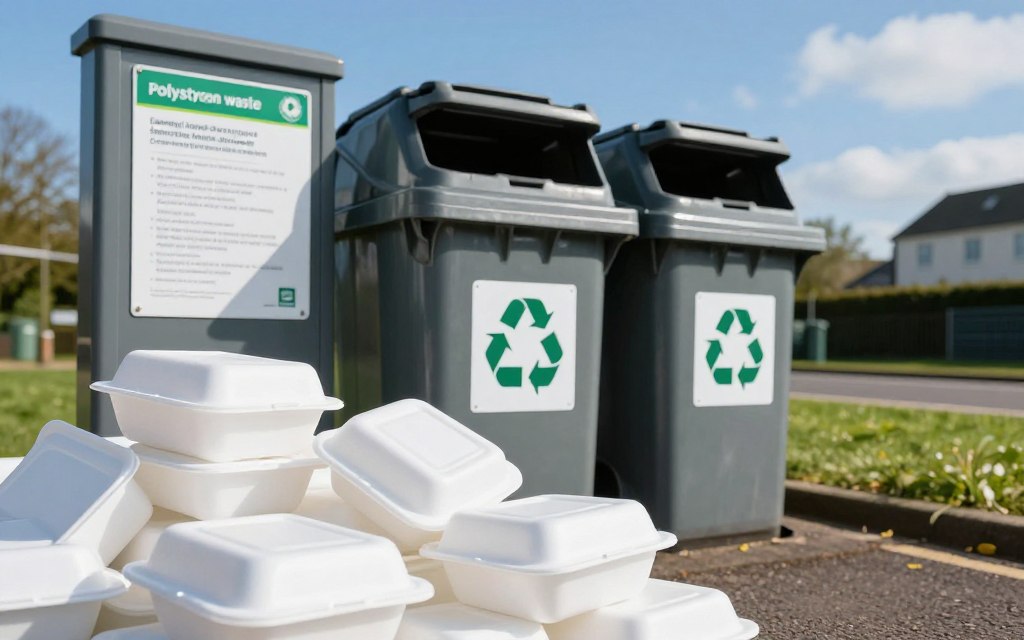
How to Prepare and Sort Polystyrene for Recycling
Recycling polystyrene is straightforward when you know how to prepare it. Proper preparation gets materials ready for recycling and may help local facilities accept them. This guide explains how to prepare polystyrene for recycling.
Cleaning and Separating Polystyrene Materials
To start, clean polystyrene packaging thoroughly. First, remove any tape, labels, cardboard, plastic film, staples, and other attached materials when practical. These items can contaminate recycling and slow the process.
Shake or brush loose dirt from the polystyrene. Ensure the materials are completely dry. Check food-contact items for grease, sauces, or other residue.
If you cannot clean these items well, place them in general waste unless a specialist facility says otherwise.
Keep white expanded polystyrene (EPS) packaging separate from colored, laminated, coated, or mixed-material products. This matters because many recycling facilities have different rules for each material type.
Do not place loose foam in recycling containers unless your local council clearly accepts it. Loose foam can scatter and contaminate other recyclables, making recycling harder.
Identifying Recycling Symbols and Codes
Understanding recycling symbols and codes is vital when recycling polystyrene. Polystyrene commonly uses plastic number 6, also called PS. This symbol identifies the material, but does not guarantee recyclability.
Distinguish the recycling triangle, resin identification code, and manufacturer claims. The recycling triangle shows that a product is recyclable, but local collection rules may differ. Check local recycling guidelines to learn whether they accept polystyrene.
For unfamiliar items, photograph or describe them when contacting your council or a specialist recycler. This can clarify whether the items can be recycled.
Correctly sorting and preparing polystyrene protects other recyclable materials. It also improves the chance that clean polystyrene packaging enters an appropriate recovery stream.
For more detailed information on recycling practices, visit this helpful resource.
Specialized Polystyrene Recycling Facilities and Drop-Off Points
When standard recycling services cannot handle polystyrene, specialized facilities fill the gap. These centers support commercial packaging recycling and help process polystyrene correctly.
Specialized polystyrene recycling centers often use compaction, densification, and shredding. These processes reduce material volume, making it easier to create new products. Likely users include:
- Retailers with large amounts of packaging waste
- Warehouses that receive bulk shipments
- Construction companies handling insulation materials
- Appliance installers using protective packaging
- Offices that accumulate various types of polystyrene
Businesses should ask which materials facilities accept. Questions to ask include:
- Do you accept post-consumer EPS?
- Can you take clean packaging, insulation offcuts, or food-service items?
- What are the charges and collection volumes?
- Will you provide documentation for recycling?
For households, community recycling initiatives offer another responsible disposal option. Local drop-off programs, retailer take-back initiatives, and charity collections can help. Confirm acceptance before traveling to EPS drop-off points.
Charity organizations may accept reusable packaging for moving or craft projects. They often reject damaged or contaminated foam, so keep materials clean and dry.
For safe and convenient recycling, follow these tips:
- Keep materials dry and protected from the elements.
- Transport loose EPS in bags or boxes to prevent litter.
- Never leave items beside a full collection point.
By checking a facility’s claims and choosing an officially listed drop-off route, you support polystyrene recycling in your community.
Reducing Polystyrene Waste: Reuse and Sustainable Alternatives
To tackle polystyrene waste, prioritize reuse and explore sustainable alternatives. The waste hierarchy places prevention and reuse before disposal. These steps can greatly reduce polystyrene’s environmental impact.
One practical way to reuse polystyrene at home is keeping clean Expanded Polystyrene (EPS) blocks and protective inserts. You can repurpose these materials for several uses, including:
- Storage of fragile items
- Moving and shipping delicate products
- Seasonal decorations
- Craft projects
Make sure the material stays intact and away from children and pets, because small pieces can be dangerous. Businesses and community groups can reuse clean packaging for repeated shipments, art projects, and education projects.
Never reuse food-contaminated or damaged foam for food contact. Do not use it where fragments could spread, because safety comes first. Safe reuse helps maximize the value of existing materials.
Several sustainable packaging alternatives to polystyrene are available. Each option has benefits, and the best choice depends on product protection, weight, durability, and shipping distance. Viable options include those below; also consider reuse rate, recyclability, and local processing infrastructure.
| Material | Benefits | Considerations |
|---|---|---|
| Molded Pulp | Biodegradable, made from recycled paper | May not be as durable as polystyrene |
| Corrugated Cardboard | Recyclable, lightweight | Less protective for fragile items |
| Reusable Plastic Containers | Durable, can be used multiple times | Environmental impact depends on production and disposal |
| Wool/Textile Padding | Natural, biodegradable | Higher cost compared to synthetic options |
| Reusable Delivery Systems | Reduces waste significantly | Requires infrastructure and consumer participation |
To further reduce packaging waste, consumers can take practical steps. Choose products with minimal packaging, combine online orders, and ask retailers about plastic-free or reusable options. Support refill or take-back schemes for a more sustainable approach.
Together, conscious choices and alternatives to polystyrene can reduce polystyrene waste and environmental harm. For more information on how to eliminate foam from your life, check out this resource.
The Future of Polystyrene Recycling Policy in the UK
The UK’s extended producer responsibility EPR plan may soon change polystyrene recycling. Growing environmental concern and new rules could reshape how people manage this material. At its center is the idea of Extended Producer Responsibility (EPR), which shifts packaging waste costs from councils to producers.
Under EPR, manufacturers may design better packaging, add clearer labels, and fund recycling systems. This UK packaging policy could improve packaging management and change how the UK handles polystyrene. However, EPR creates gradual improvement, not instant acceptance by every local authority.
Extended Producer Responsibility (EPR) and Policy Changes
EPR could significantly reshape the UK packaging policy. Producers will answer for their packaging’s full life cycle, including disposal. The policy may improve recycling systems and reduce hard-to-recycle materials.
Future rules may require recycled content and standard recycling practices across regions. These changes could promote greater consistency. However, consumers should follow current council instructions because new rules may take time to start.
EPR will succeed only through cooperation among producers, local authorities, and consumers.
Innovations in Polystyrene Recycling Technology
New advances in polystyrene recycling technology may improve recycling. Better EPS compaction and densification can make recycling operations more efficient. Mechanical methods can also turn polystyrene into new products and reduce waste.
Moreover, chemical recycling techniques are gaining support. Chemical recycling polystyrene breaks the material into useful chemical feedstocks. These methods may address contamination and scale problems, but energy use and costs remain challenges.
Recycling works best when reliable end markets exist. Recovered polystyrene should reach manufacturers making products with real demand. As the UK changes, consumers should follow policy updates and avoid assuming new symbols or claims immediately change household recycling practices.
Polystyrene recycling in the UK will depend on new technology and strong policies. Policymakers, producers, and consumers must work together to build a sustainable recycling system.
| Aspect | Current State | Future Outlook |
|---|---|---|
| Producer Responsibility | Limited | Extended through EPR |
| Recycling Technology | Basic mechanical methods | Innovative chemical processes |
| Market Demand | Inconsistent | Growing for recycled materials |
Conclusion
Understanding polystyrene recycling helps support responsible waste management. This polystyrene recycling guide explains that polystyrene can be recycled, but it often needs specialized facilities. Most standard UK household recycling collections do not accept it, so check your local rules.
Knowing the difference between expanded and rigid polystyrene matters because each type has different handling needs. Follow these household recycling tips: identify the type, remove contaminants, and clean materials as much as possible. Always check the resin code, but remember it does not guarantee acceptance.
Ask your local council about responsible polystyrene disposal rules. Use approved drop-off points or specialist providers when available. Damaged or contaminated material may need general waste disposal, according to local instructions.
Before disposal, consider reusing polystyrene by keeping clean protective packaging or offering it to community groups. Reuse and waste prevention support better UK waste management practices. Always stay informed about your council’s current guidelines and latest regulations.
